Lyndon has been working hard on one of his SAT Buster books today!
Well done Lyndon !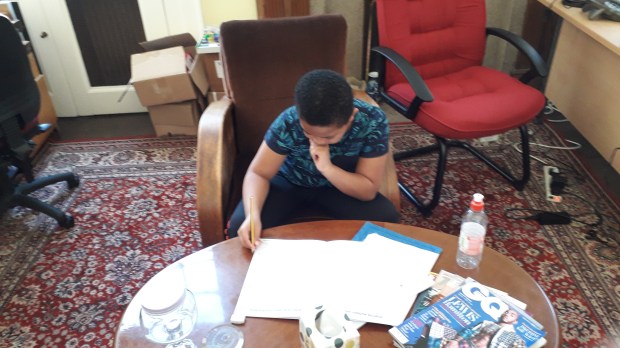
Lyndon has been working hard on one of his SAT Buster books today!
Well done Lyndon !
@MoorfieldPrim Homeschooling going well here. PE: Joe Wicks, a run around the field, HISTORY: 80’s tv appreciation..A-Team and Knight Rider, DRAMA: Alix is on outfit number 4! Winning 🙌🙌🙌

Harry has been carrying out an experiment at home (under close supervision of his Mum and Dad) and I asked him to write down how he did it.
Harry has a hot wire set and this is how he did it:
LEDs in Parallel
In a parallel both LEDs receive 3V each from the battery and they both light up.It seems as if you are getting more out of the batteries as only 3V is lighting both LEDs, but in reality the batteries will only last half as long as they would if both LEDs were touching each other
Testing Electrical Conductivity
Some materials can conduct electricity (this means that electricity can pass through them), and other materials can’t conduct electricity.
This circuit can test whether different materials are conductors, or non-conductors.
I built the circuit, then I held a spoon across the two terminals A and B. I pressed the button and the light bulb turned on!
From Harry Matthews
Well done Harry! We are all really pleased to see your good work!
We have a video of the experiment on Twitter . Just click on the link. It’s worth a watch!
Children can go out in the garden as a break from their schoolwork, especially as the weather is so nice at the moment.
At the weekend Harry was helping his Mum and Dad clear the leaves on the patio.
We think that Mrs Harvey would be very proud because in the Autumn it is a job that she battles with every day!
Well done Harry!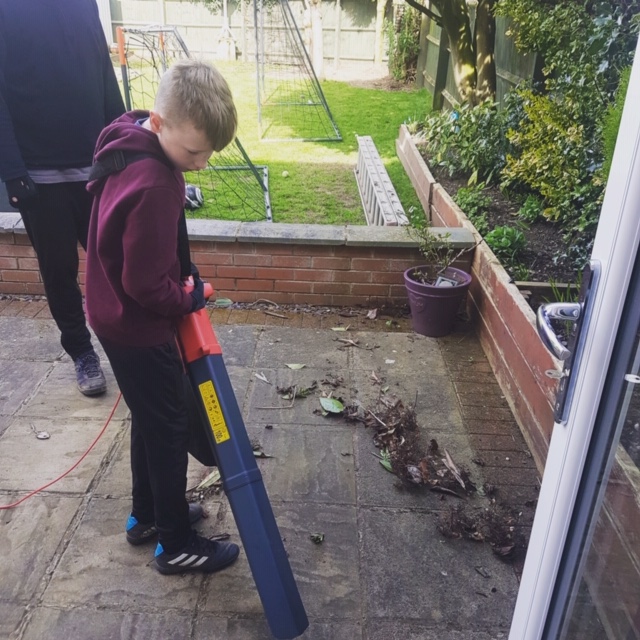
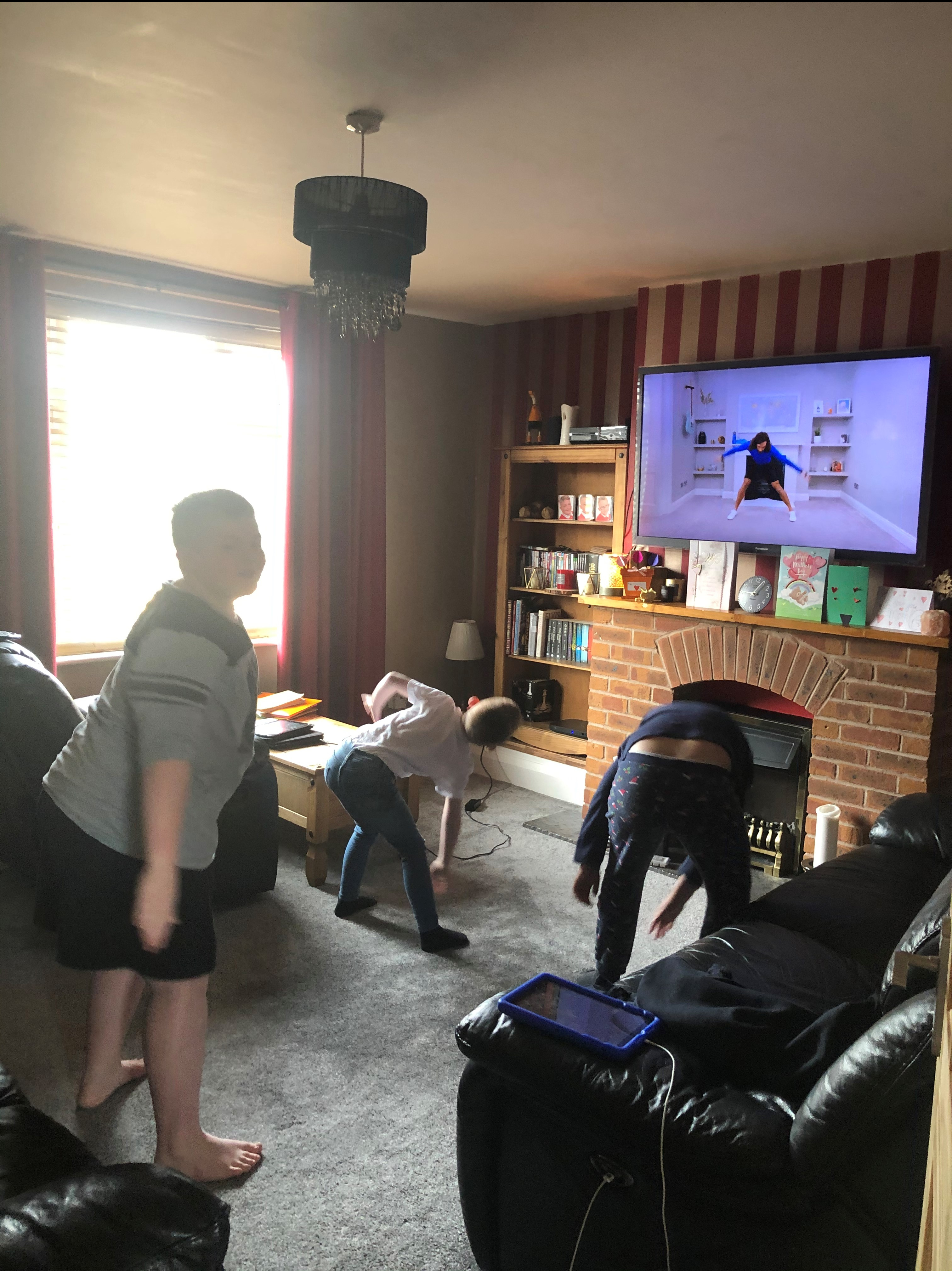 The Gripton family are having a routine school day today. They started the morning with the Joe Wicks workout.
Joe Wicks is a personal trainer who has become famous with his workout videos.
He has pledged to do daily PE lessons for children via his Youtube channel and is determined to keep the country moving whilst the schools are closed.
This morning 800,000 children joined in and it is a great way for children start the day whilst Mrs Harvey is out of reach.
Just search Joe Wicks PE lessons on Youtube for more information.
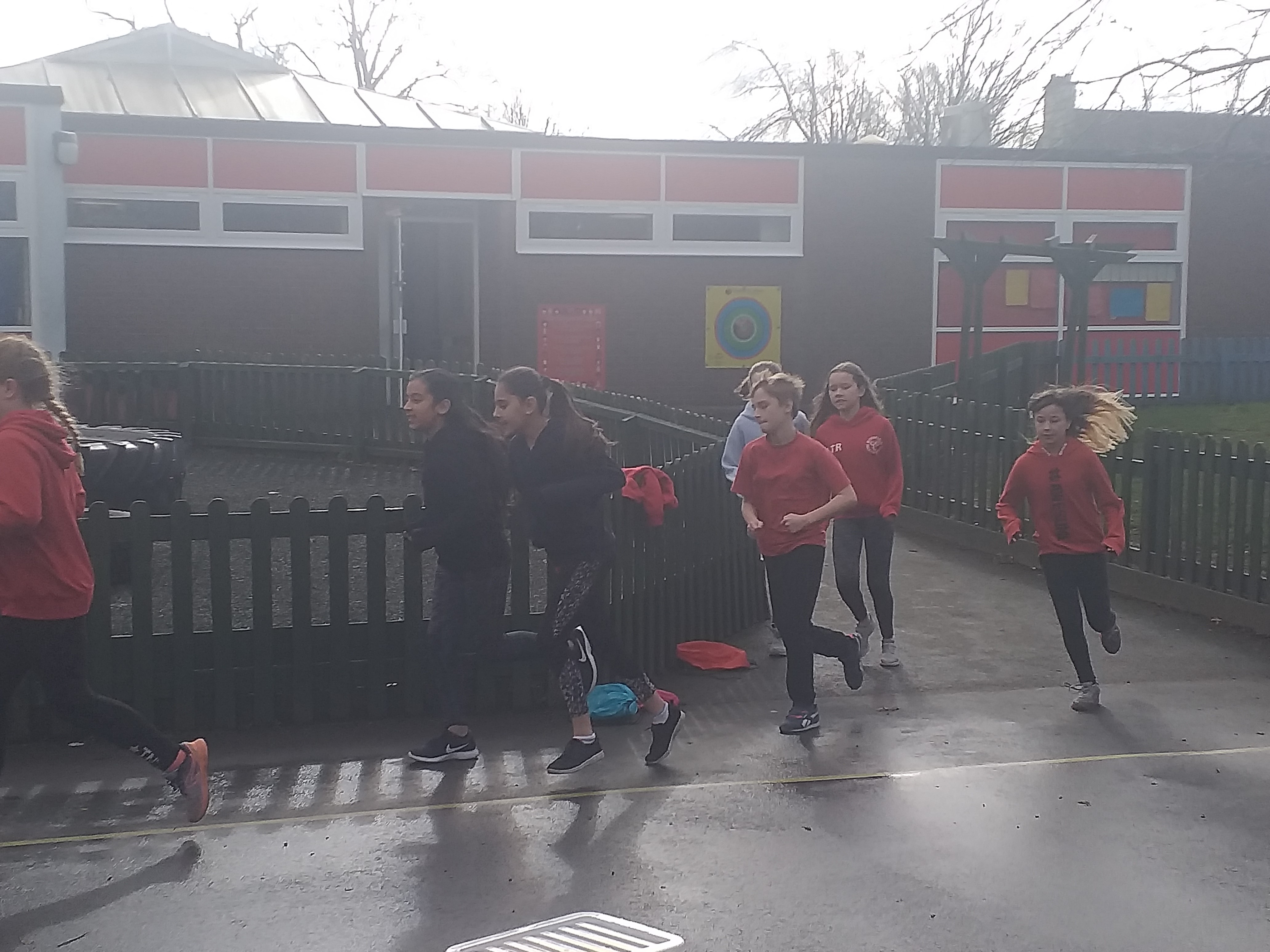
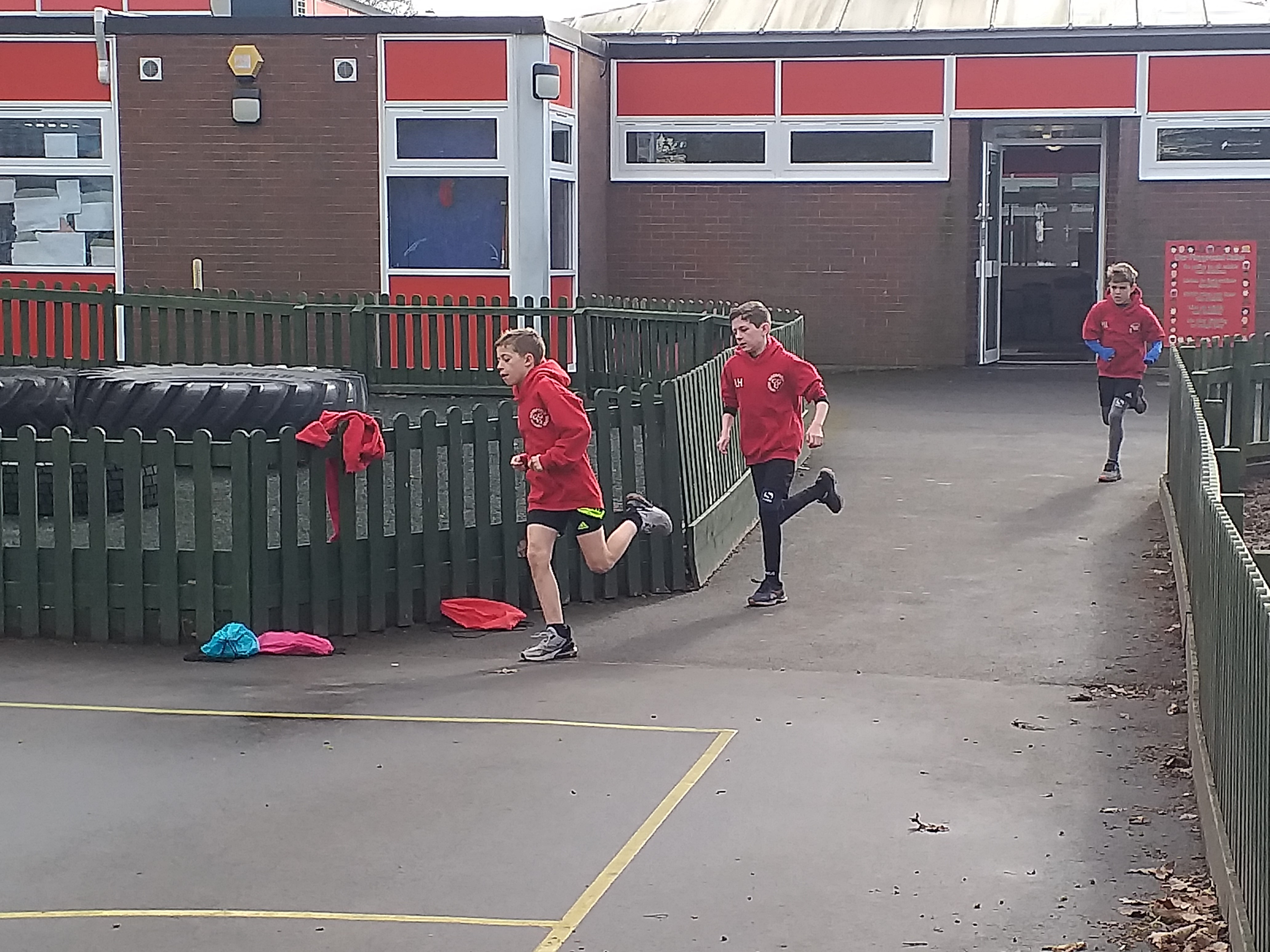
Every Friday, Year 5 do Fitness with Mrs Harvey. All the classes have a fitness session with her and we will blog more of these over the coming weeks.
Year 5 children run either 7, 11 or 14 laps building up over time. 7 equates to a mile, 11 to a mile and a half and 14 to two miles.
Records are kept in the classroom and all the children aim to have run a half marathon or a marathon by the end of the school year.
All the children love their fitness sessions with Mrs Harvey and she has her own unique way of making fitness fun!
We will keep you posted with their progress!


In PE today, Base 2 have been learning gymnastics.
Working with a partner in a small group, using floor and mats, they have been creating and performing a sequence of at least 8 elements. e.g a combination of asymmetrical shapes and balances with symmetrical rolling and jumping actions.
The sequence should include changes of direction and level and incorporate mirroring and matching shapes and balances.
I watched for a while and some of the ideas were really creative. Sadly my photography is not so – some of my “action” photos are lacking in clarity, but hopefully you will get the idea of what the children have been working on!


The KS2 children have taken part in a Virtual Reality day today.
Base 1 were the first children to take part and used the headsets to learn about the respiratory system.
Back in class they followed up the demonstration by learning how oxygen travels through the body. They have done this by creating comic strips.
At the end of the lesson they should be able to:


This afternoon the children in Base 1 have been learning about understanding texture in a piece of music.
They have used a graphic score and a soundscape to describe an African Thunderstorm.
They were so pleased with it, they came round and asked me to add it to the blog.
Unfortunately, the video won’t load but it is on Twitter for you to see.
We love it and hope you do too!
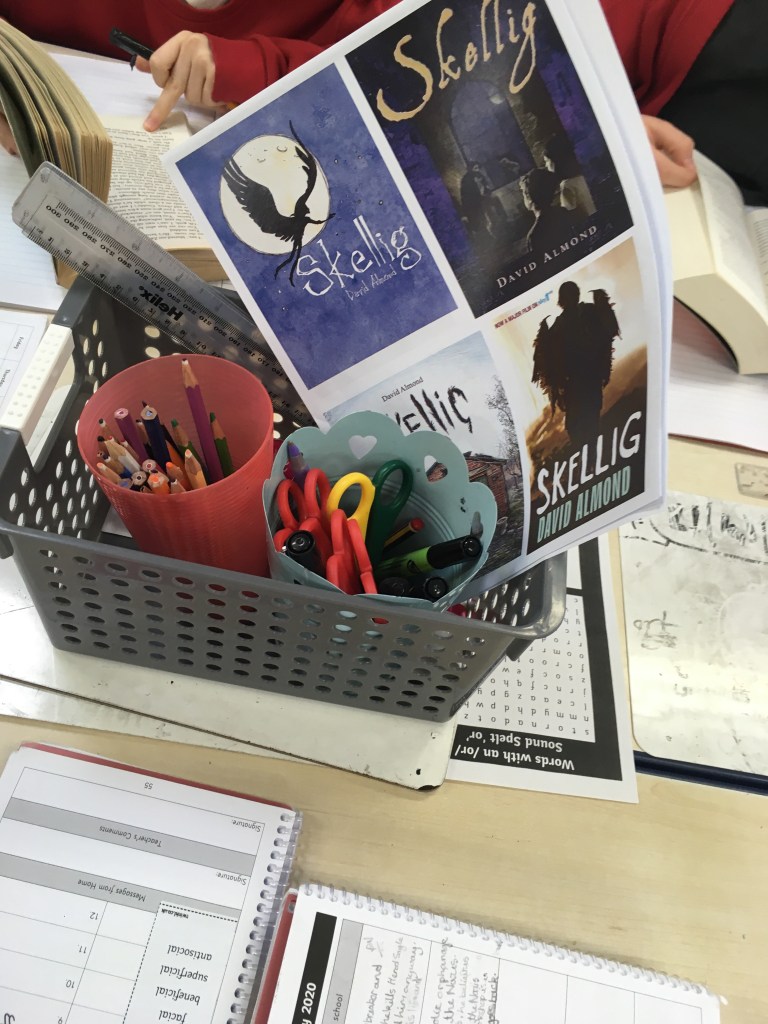
Skellig is a children’s novel by the British author David Almond, published in 1998.
Currently, Year 5 and 6 are using Skellig as their whole class text and some of the English tasks are based around this.
Today’s task for Base 2 is inference.
What is inference?
An inference is any step in logic that allows someone to reach a conclusion based on evidence or reasoning.
It is similar to a conclusion or a deduction.
Inferences are very important when reading a story or text andis a good reading comprehension skill.
When we make inferences while reading, we are using evidence provided by the author to draw our own logical conclusions.
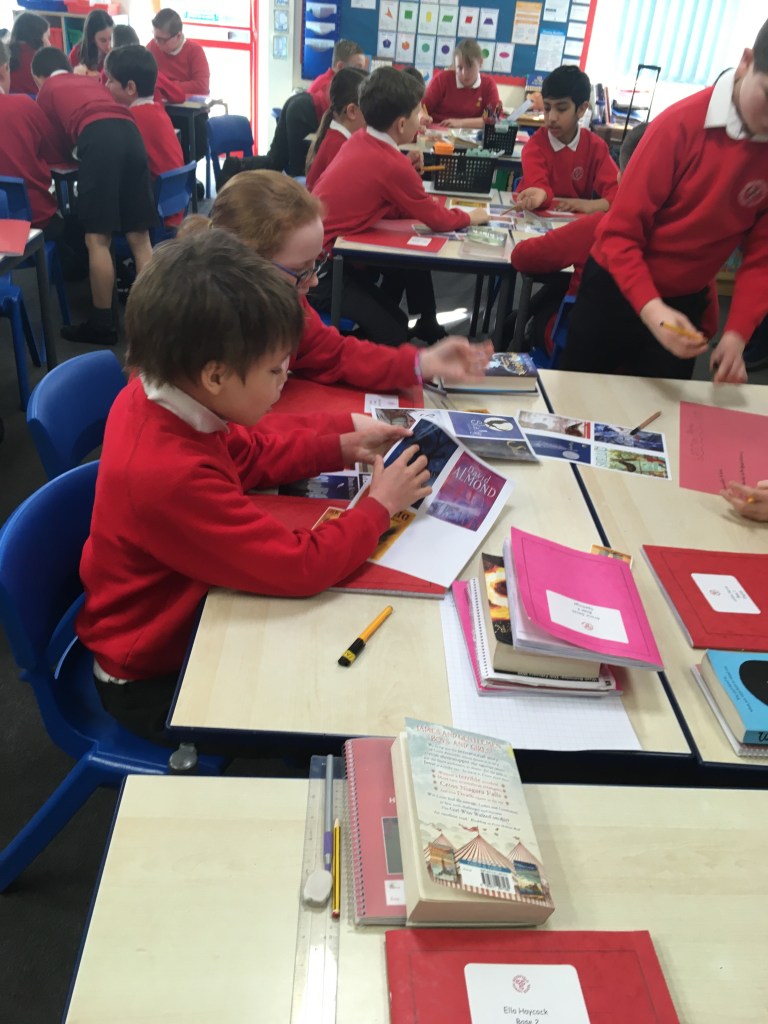
Since publication, Skellig has been printed in several editions, each with differing designs on the cover.
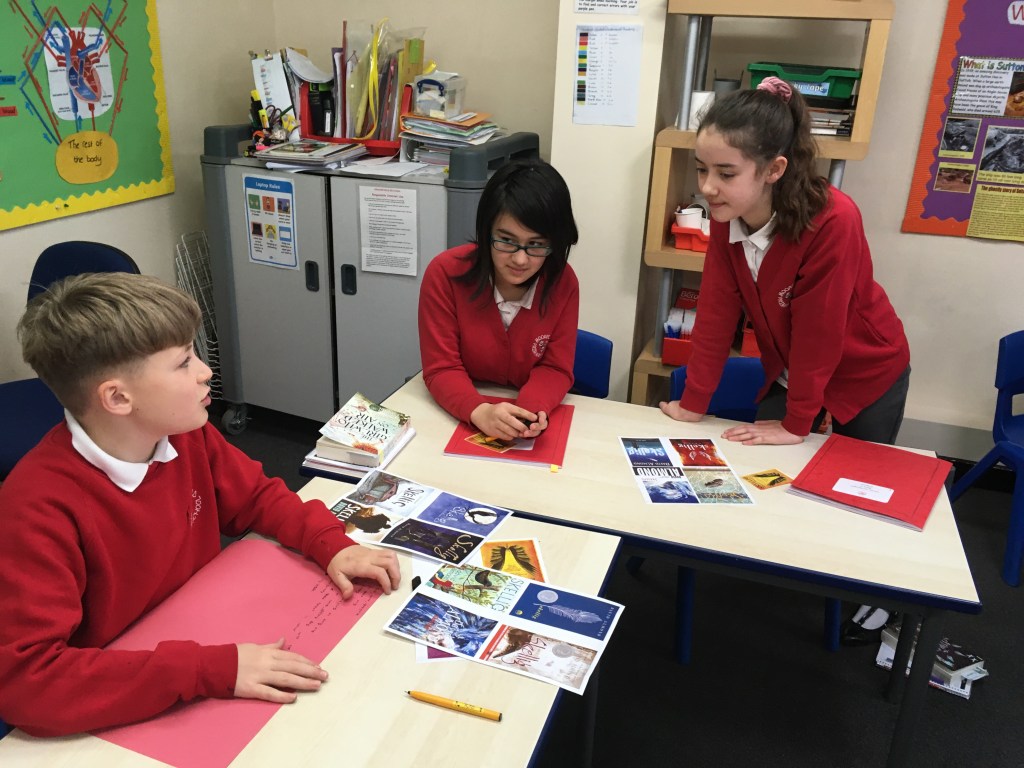
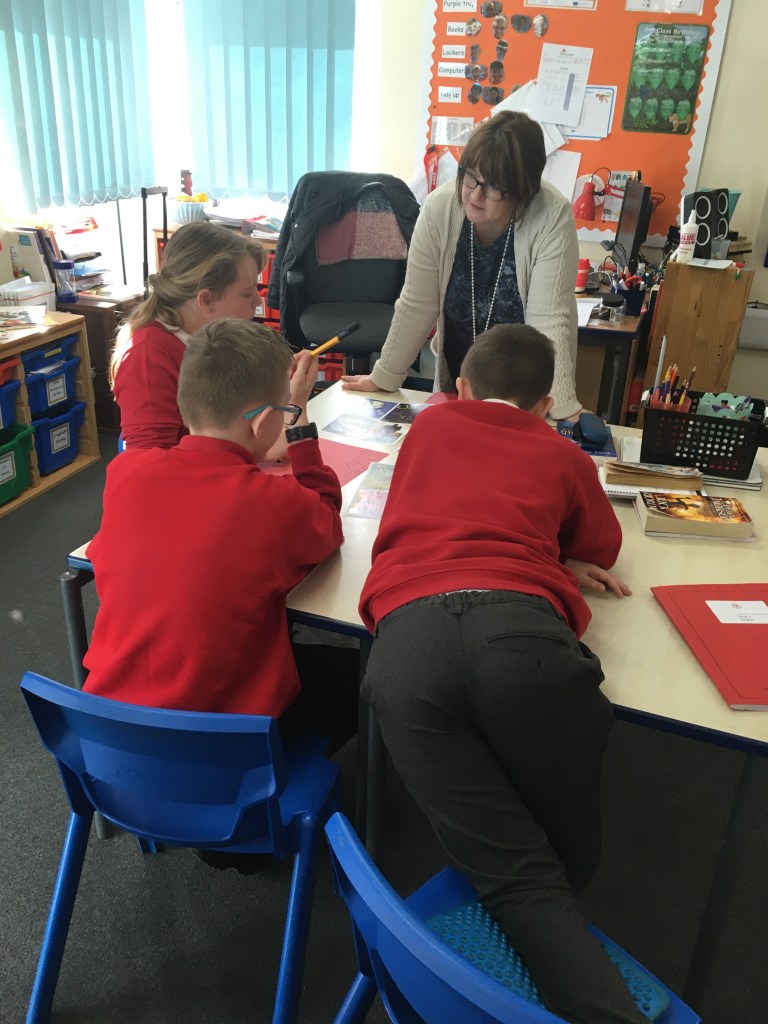
Today, children are looking at the different book covers and using inference skills to see how a book cover can help you predict what will happen in a story.
They are working in groups to look at what is appealing, what is interesting and what the cover might tell you about the book.

 Moorfield Primary School